The merger between Time Warner and AOL, formerly America Online, was meant to combine entertainment with the internet. However, due to slow advertisers and a loss in market share, the value of AOL took a downturn and there was a goodwill write off amounting to $99 billion. This is the largest loss ever reported by a company. It should be noted that at the time Mr. Gerald Levin was Chief Executive Officer (CEO) of Time Warner and Mr. Steve Case was CEO of AOL. Mr. Levin resigned after being ousted by Mr. Case who was encouraged by Vice – Chairman Mr. Ted Turner. After changes in executive leadership particularly regarding the (Chief Operating Officer) COO, Mr. Case was eventually forced to step down as executive chairman.
For AIG (American International Group) which largely focused on insurance the trouble started before the Financial Crisis of 2007-2008. During the Financial Crisis where it was the second largest loss-making company. In 2005 the company was faced with fraud allegations which led to Mr. Hank Greenberg being at the center of the accounting scandal. There was a $1.6 billion fine. The company had to restate its financial statements from 2000 until 2003. In 2005 the CEO (Mr. Hank Greenberg) was replaced by Mr. Martin Sullivan. The company then ended purchasing 21st Century Insurance. Under Mr. Sullivans leadership AIG started making investing errors such as: firstly, investing in instruments such as derivatives but without hedging the risk, secondly it spent a lot of money buying mortgage-backed securities.
In 2008 Mr. Sullivan was ousted by three other directors. In 2008 AIG reported losses and a falling share price. Mr. Sullivan was replaced by Mr. Willumstad which didn’t last long as the US government asked him to step down and he was replaced by Mr. Ed Liddy. In 2009 Mr. Liddy was replaced by Mr. Bob Benmosche. The Financial Crisis heavily impacted AIG to the point where there was a liquidity crisis. The credit default swaps that the company had invested in were based on collateralized debt obligations which declined in value during the Financial Crisis. There was $441 billion worth of securities which were originally rated triple A the highest rank. Of those securities $57 billion were based on subprime loans. When AIGs credit rating was downgraded it had to pay additional collateral which led to a liquidity crisis and essentially bankrupted the company by $85 billion.
In our own country of South Africa, we have recently encountered companies which have failed to earn a profit or be operational. The most notable of these companies is Steinhoff International although founded in Germany the company was listed on the Johannesburg Stock Exchange. According to the Association of Certified Fraud Examiners, JP Morgan Chase were suspicious of Steinhoff’s financial statements as early as 2007.
So what exactly happened with Steinhoff? Basically Steinhoff was a holding company which owned several businesses and as a result Steinhoff used this business structure to manipulate its financial statements. The company made intercompany loans which resulted in the inflation of the profits made by the company and the asset values. The profits were inflated by $7.4 billion. This act of fraud took place from 2009 until 2017. Another, issue was the independence of the auditor, Deloitte which signed off on these financial statements.
So what was the outcome? In 2015 German authorities raided the company and in 2017 Steinhoff CEO Markus Jooste admitted to the mistakes and resigned. The stock price fell around 97%. There was also a change in auditors to PwC. It should be noted that at the time of writing this in 2024, Mr Jooste had died and the Chief Financial Officer during the years of fraud Mr Ben La Grange was sentenced to 10 years in prison.
Tongaat Hulett an agriculture business had a similar issue facing it. The companies key executives inflated the profits over a number of years, this is in particular to its property division business. The purpose of inflating the profits was to reward its executives with bonuses. When, the fraud was publicised the company had to restate its financial statements which led to a R12 billion write down. As a result the company was over leveraged by R6.6 billion. The company is currently in business rescue, experts posit that most of the debt to banks is about R4 billion is interest. There was also a change in auditors from Deloitte to PwC.
The executives former Chief Financial Officer Murray Munro, former Property Division Head Michael Deighton, Finance Section Head Rory Wilkinson; Legal Executive Kamlasagrie Singh and Finance Executive Samantha Shukla, and former Deloitte Auditing Partner Gavin Kruger have been charged with defrauding the company to the tune of R2.5 billion. The JSE fined the company R7.5 million and the Financial Sector Conduct Authority (FSCA), which is the regulator in South Africa, fined the company R20 million. The real consequence and heartbreak are that 8000 jobs that have been lost.
In conclusion lately in the public discourse there has been a conversation around privilege particularly by members of society who have not had a long-term period of financial disadvantage. But privilege is not limited to what you can afford it is also extended to what society permits regarding behavior. We should also start looking at the privilege within structures which allow the freedom for certain groups to behave with impunity and the consequences are not just a note in the financial statements.
What am I basically saying, the two examples from the U.S ended up with major losses and no one was essentially held accountable it was just a bad business decision. In South Africa, there has been some effort of a form of accountability by the members being taken to court. However, in the case of Steinhoff people lost their life savings and that cannot be recovered by a prison sentence. For Tongaat there is a court process in place but it will not restore the 8000 jobs lost to people who may have only been able to have the skills to acquire that kind of job.
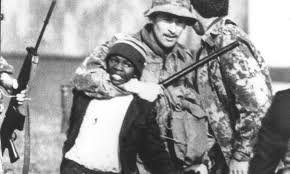
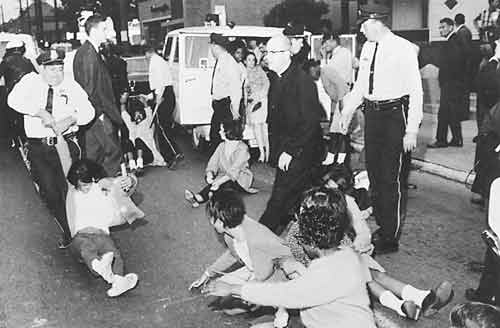 Growing up South Africa post the end of Apartheid and having read of the civil rights movement I only heard tales of the police brutality most from my father and grandparents in South Africa who were directly affected I have found myself disenchanted by the idea that those who made an oath to protect could be the ones displaying such cruelty and savagery. I am no longer disenchanted and have come to realize the jarring truth that the protection and privilege of being kept safe may not be viewed to be for us all. The true story within all of this will be how we deal with the issues behind the symptom of the problem. If we continue to teach and talk about our predecessors and current victims we could inspire change.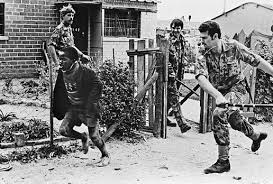


 thenjimaseko.com